

RESULTS & WHAT WE ARE LEARING
EARLY FIELD RESULTS
Six months into the block installation, the system is showing encouraging results.
-
Greater than 50% reduction in wave energy across the installed barriers, with circulation and sediment exchange still occurring.
-
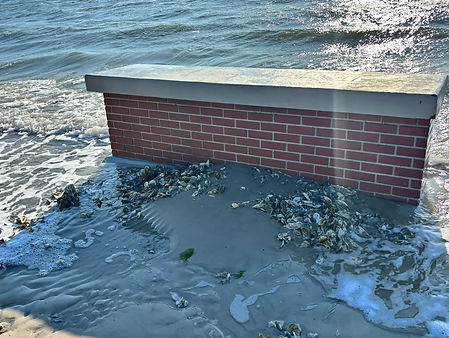
Accumulation of shell and sand in front of the revetment.
-
Seasonal shifts in where sediment is deposited, influenced by nearby low-relief sand bars and sediment moving alongshore from Ballast Creek.
-
Local areas with mud deposition approaching one foot.
-
Considerable oyster and barnacle recruitment on the installed blocks.



Bio-Rock Observations
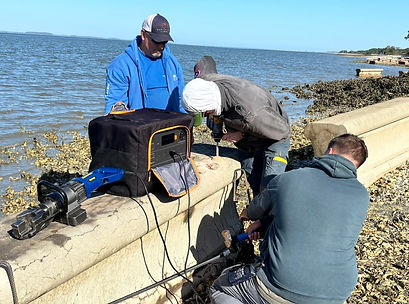
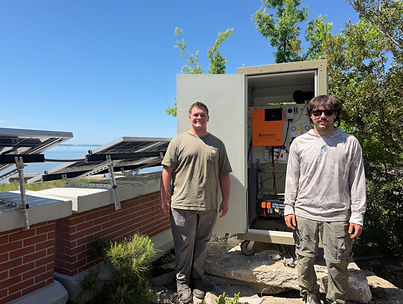
An early Bio-Rock test powered by a 10-kilowatt hydrokinetic turbine accumulated more than 2,000 pounds of barnacles in approximately five to six weeks. After the experiment moved into the shallower intertidal zone and shifted to land-based solar power, researchers observed rapid calcium-carbonate precipitation on submerged cathode elements, including up to roughly half an inch during the first week in some locations.
Oyster and barnacle recruitment has also been observed on the blocks. The team is continuing to evaluate whether the Bio-Rock field measurably improves recruitment and growth compared with structures not exposed to the field.






Learning Is Part of the Design
The project is intentionally adaptive. Monitoring is being used not only to measure performance but also to identify refinements — including possible changes to barrier configuration and the use of additional concrete structures — while protecting the natural movement of sediment into the site.